
Gigabit UK and getting it done
Andrew Ferguson of thinkbroadband, as our guest blogger, gives us his views on the Government's gigabit connectivity ambition.
The opinions expressed in this blog are Andrew’s alone, and don’t reflect the views or opinions of Openreach.
So, the UK Government has confirmed it will spend £5 billion on gigabit-capable broadband to reach the 20% of the UK that it believes will not be reached by commercial operators.
Getting to 100% gigabit coverage looks extremely optimistic given the coverage level of 14.8% today, but it is important to remember that gigabit-capable encompasses several technologies, namely Full Fibre, DOCSIS 3.1 cable broadband and potentially 5G when using the higher frequency bands.
"A lot of this intervention work will be in the rural villages and hamlets."
The UK will likely hit a gigabit coverage level of around 60% in two years, this seems incredibly encouraging but this was the easy part and from the end of 2021 to end the of 2025 you are looking at operators building totally new networks.
The Government believes from its own modelling that it will need to intervene to build something gigabit-capable to 20% of the UK and we expect almost all this to be Full Fibre. A lot of this intervention work will be in the rural villages and hamlets that have missed out on the commercial rollouts.

The £5 billion is a big sum of money and split between 5 to 6 million properties which is what 20% of the UK is - that is only funding of £800 to £1,000 per property. And while the centre of a village might see the costs of rollout at £500 per property the costs quickly rise as you head outside a village and may be looking at several thousand pounds for the outlying properties. If the £5 billion is to be matched by those bidding for the contracts, as was mostly the case with the BDUK contracts, then the figures look more reasonable.
One major looming problem is once the gigabit switch on and commercial Full Fibre rollouts ramp up in the urban parts of the UK, those missing out are going to be more vocal and therefore it is critical the Government get things up and running for this 20% intervention so that people can quickly see things happening. This is why I suspect that given the projects are only likely to deliver the first premises in early 2022 that we will see existing voucher schemes extended, possibly drawing down some of the £5 billion of funding. Unfortunately, my view is that while vouchers are good for individuals they generally do little for the wider community and business environment and the fragmentation they can cause may actually dissuade some smaller commercial operators from going to areas.
So, what is the pay-off from building Gigabit networks to everywhere in the UK?
Today the numbers buying gigabit products when given a choice of speeds is actually very low, in the order of 1 to 5%. While I don’t expect everyone to be clamouring for gigabit speeds in 2025, the increasing size of digital content, especially around online gaming, will see demand increasing to perhaps 1 in 3 opting for a 500 Mbps or faster option. This demand will be dependent on pricing and while this one third of people may be willing to pay a premium (ignoring inflation) the price for a gigabit service needs to be around £40/m and to get people to upgrade to the more reliable Full Fibre platforms the entry level product and speeds need to be £25/m for a 100 Mbps service.
But remember 2025 is not the end of the rollout for Full Fibre, the UK Full Fibre figure should be around the 50 to 60% mark if everything goes to plan in 2025 but some operators may continue to rollout and overbuild their competitors pushing closer to 100% real Full Fibre.
I predict that at some point between 2030 and 2033 that the UK will reach as close to 100% Full Fibre coverage as is possible without spending silly money on a few hold-out areas. At the current pace of building for Full Fibre the expected date is actually more like 2042 to 2044 but we are still seeing operators increasing their build rates.
Andrew Ferguson OBE
Editor in Chief, thinkbroadband
Related Articles
-
Full Fibre broadband could help cut your carbon footprint – here's how
20 Jan 2020 Full Fibre - gigabit - broadband is not just faster, more reliable and future-proof, it can also help you be more energy efficient.
 -
Full Fibre Broadband is going to turbocharge the economy - here's how
11 Nov 2019 Experts at the Centre for Economics and Business Research have studied the link between Full Fibre connectivity and the nation’s future prosperity.
 -
Rural communities joining the race for better broadband
27 Jan 2020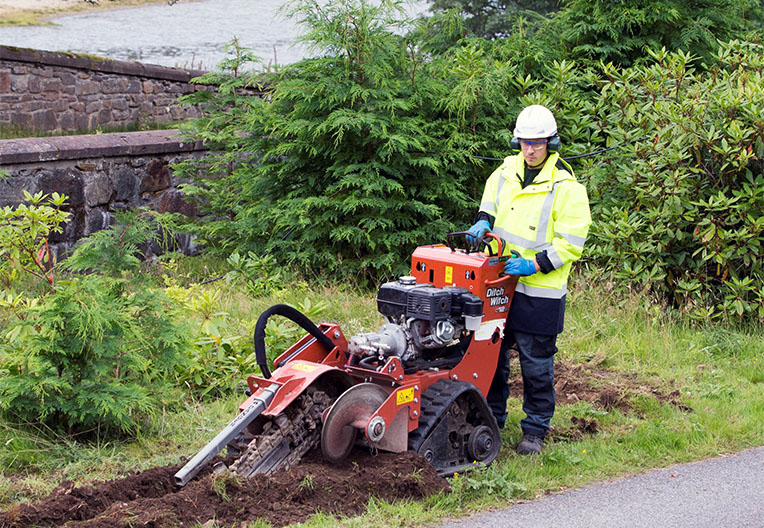 A large proportion of our new Full Fibre network is already in rural areas and we want to go much further. We’re widening out our build programme to include 250,000 homes and businesses in more than 200 rural locations.


© Openreach Limited 2024




© Openreach Limited 2026



© Openreach Limited 2026




© Openreach Limited 2026